Dora Keith
Anne of AvonleaDora Keith is the quieter of the Keith twins, a neat, observant child whose orderly habits set her apart from her impulsive brother, Davy Keith. After a funeral, Marilla Cuthbert brings the twins home to Green Gables, taking responsibility for them at a late point in her life. Dora’s calmness and willingness to help make her an apparent contrast to Davy’s disorder, but her episodes of fear and distress also show the limits of that composed exterior. Her place in the household becomes lasting when an inheritance provides for both children’s maintenance.
Identity and Arrival
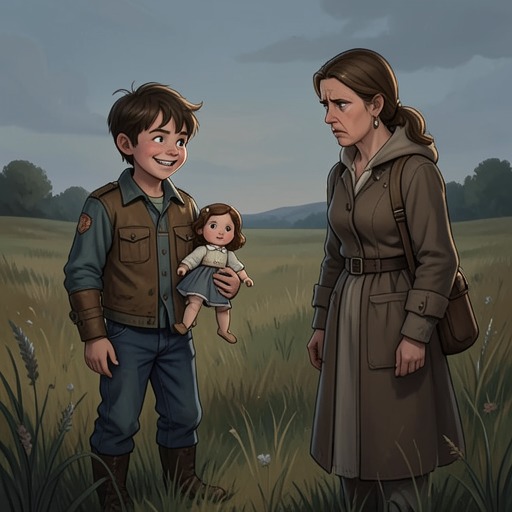
Dora enters the story as part of a change in Marilla Cuthbert’s household. Seeing Marilla return from the funeral with the twins, Rachel Lynde notices Dora sitting upright and prim in the buggy, in contrast to Davy, who leans over the dashboard to grab at the pony’s tail. The difference is visible from the outset: Dora seems orderly and self-contained, while her brother is already in motion. Rachel recognizes that Marilla will have her hands full, but also expects Anne Shirley to help, observing that Anne has a knack with children.
At Green Gables, Dora submits calmly when Anne welcomes her with a kiss. That composed greeting continues at supper, where she behaves like a little lady while Davy’s manners draw correction. Yet the contrast is not simply a division between a capable girl and a troublesome boy. Dora is still very young, and her politeness does not mean that she is independent of adult protection. The household must learn to care for each twin according to a different temperament and different needs.
Life in the Household
Dora’s industriousness becomes clearest in the account of ordinary chores. She feeds chickens, picks up chips, wipes dishes, and runs errands suited to her small hands. She is described as neat, faithful, and observant; she learns a task without needing to be told twice and remembers her duties. Davy, by contrast, is forgetful and heedless, though he has a strong gift for winning affection. The comparison gives Dora a specific role in the family portrait: she supplies steadiness, but the adults’ affection is not allocated only according to good behavior. Anne and Marilla still find themselves liking Davy the better, despite his greater mischief.
Dora’s compliant nature can also leave her exposed to her brother’s schemes. During a gathering at Green Gables, she is persuaded by Davy to walk along a pigpen fence after he calls her a fraid-cat. She falls into the pen, where a pig runs over her, and her dress becomes filthy. Davy then tells her that standing under the pump will wash it clean; she follows his instruction, only to have water poured over her without her clothes becoming cleaner. When Dora returns, drenched and sobbing, the sight disrupts the gathering and makes her distress impossible to overlook. Her spoiled dress, sash, and shoes turn a childish dare into a real cost, while Anne’s guilty glance toward one of the guests underscores the household’s embarrassment as well as its concern for Dora.
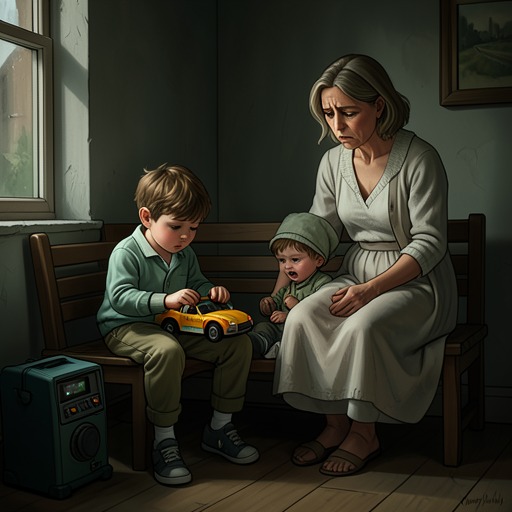
Another episode presents a more serious danger. Dora is found alone in the Harrison toolhouse, tearful, cold, and hungry. She explains that she and Davy had gone to see Ginger, but that after they could not see the parrot, Davy brought her to the toolhouse, shut the door, and ran off. Anne finds her sitting on an upturned nail keg and takes her up. Dora’s account conveys how completely her trust in her brother’s plans has failed her in that moment: she has cried, feared that no one would come, and is relieved when Anne arrives. The contrast with her usual dutifulness matters; Dora is not merely the quiet twin but a small child whose safety depends on the adults noticing when her trust has been misplaced.
School and Growing Up
When school reopens, Dora joins Anne’s pupils among the six- and seven-year-olds. She has already made an arrangement at Sunday School to sit with Lily Sloane, but when Lily is absent on the first day, Dora is temporarily placed with Mirabel Cotton, an older pupil. The detail shows her entering a wider social world with expectations and attachments of her own: she has made a compact about where to sit, even if circumstances require a change. School also marks a new setting shared with Davy, who sits with another boy and reports the pleasures and difficulties of his first day. Dora’s own first-day experience is not elaborated to the same extent, fitting the narrative’s broader contrast between her quiet manner and her brother’s talkative mischief.
At home, Dora is sometimes present in the background of Davy’s antics. When Anne returns from school one evening, Dora is asleep on the kitchen sofa while Davy is in a closet eating Marilla’s forbidden yellow plum preserves. Her quiet presence beside his escapade reinforces the difference between the twins without suggesting that they live separate lives: both are part of the same household routines, and the adults’ work of raising them encompasses ordinary sleep, food, chores, discipline, and school.
A Permanent Home
The uncertainty surrounding the twins’ future is resolved by news of Richard Keith’s death. A month after Marilla and Anne worry about hearing from him, a letter from the executor of his will reports his death and leaves two thousand dollars in trust to Marilla for David and Dora Keith until they come of age or marry. In the meantime, the interest is to support their maintenance. Anne feels sorrow for Richard Keith alongside relief that the twins can remain with them; Marilla explains that she wanted to keep the children but could not see how to afford their needs as they grew older. She had also been determined not to use Anne’s money for their care. The bequest therefore changes the twins’ situation from a compassionate but financially uncertain arrangement into one with provision for their upbringing.
Dora’s significance lies partly in the way her steadiness sharpens, rather than erases, the demands of caring for two different children. She is capable and helpful, yet she can be persuaded into danger and frightened when left trapped; her good conduct does not remove her need for protection. Her permanent place at Green Gables is secured not by her usefulness but by Marilla’s decision to care for the twins and by the trust that makes that commitment financially possible. Through Dora, the household’s new responsibility is shown in its everyday forms: remembered errands and school arrangements, but also a drenched child returning in tears and a frightened child waiting behind a closed door.